Direct Answer: Meta Ads (Facebook and Instagram) are the most effective visual demand-generation tools for flooring contractors because they allow you to showcase transformations to local homeowners before they actively search for a provider. By combining high-resolution before-and-after creative with precise geographic targeting and an automated 5-minute lead response system, flooring companies can consistently generate qualified estimate requests at a lower cost-per-acquisition than traditional search-only marketing. This guide provides the complete framework for building a predictable flooring appointment engine.
Executive Summary: The 20,000 Word Blueprint
Chapter 1: The State of Flooring Marketing in 2026
The flooring industry has undergone a massive digital transformation. Homeowners no longer start their journey by walking into a showroom; they start on Instagram, Pinterest, and Facebook. They are looking for inspiration, validation, and a contractor they can trust. If you aren't visible in their feed with high-quality work, you don't exist in their world.
Traditional marketing methods like yellow pages, local newspapers, and even generic door-knocking are losing their effectiveness. The modern homeowner is digital-first. They value convenience, speed, and visual proof of quality. Meta Ads provides the perfect platform to meet these expectations by delivering high-impact visual content directly to their mobile devices.
In 2026, the flooring market is more competitive than ever. Large corporate retailers are spending millions on national campaigns, trying to commoditize the service. Local independent contractors must fight back with Hyper-Local Authority. Meta Ads allows you to win this fight by positioning your business as the local expert who understands the specific needs and styles of your community.
Chapter 2: The Flooring Lead Problem Meta Ads Can Solve
Most flooring contractors rely on a combination of word-of-mouth, referrals, and perhaps some basic local search presence. While these are valuable, they are often unpredictable. Referrals might dry up during a slow month, and search competition can drive lead costs to unsustainable levels. Furthermore, the flooring buying cycle is unique—it's driven by visual inspiration and life events (moving, seasonal updates, or wear and tear).
Homeowners often spend weeks or months in the "inspiration" phase before they ever search for a contractor. If you wait until they search, you are competing with every other roofer and floorer in town on price. Meta Ads solves this by putting your craftsmanship in front of them while they are still just "thinking" about it, allowing you to own the relationship from the very beginning.
The Visual Displacement Theory
The core problem in flooring marketing is Visual Displacement. Homeowners often have a hard time visualizing how a new floor will look in their specific space. Meta Ads allows you to solve this by showing real transformations in real local homes, bridging the gap between imagination and reality.
Chapter 3: The Psychology of the Flooring Buyer
Understanding the homeowner's mindset is critical for ad success. A flooring purchase is often an emotional one. It's about pride in their home, increasing property value, and improving their daily living environment. Your ads need to tap into these emotional drivers.
We categorize flooring buyers into three distinct psychological profiles:
- The Inspiration Seeker: They are 6-12 months away from a project. They love beautiful photos and "lifestyle" content. They are building their dream home in their head.
- The Problem Solver: They have a specific issue—worn-out carpet, scratched hardwood, or a dated kitchen. They are looking for a solution that fits their budget and timeline.
- The Event-Driven Buyer: They just moved in, are preparing to sell, or had a flood. They need a contractor now. They value speed and reliability above all else.
A comprehensive Meta Ads strategy targets all three profiles with different messaging and creative styles. For the inspiration seeker, we use "Style Guides" and "Trend Reports." For the problem solver, we use "Before and After" transformations. For the event-driven buyer, we use "Quick Turnaround" and "Financing" offers.
Chapter 4: The Complete Flooring Meta Ads Funnel
A successful campaign isn't just an ad; it's a funnel. Here is the architecture of a million-dollar flooring system:
Our system integrates Meta Ads directly with AI follow-up to ensure that as soon as a homeowner submits their info, they get a text message within 30 seconds. This is the difference between a lead that closes and a lead that goes cold.
The funnel must also account for Attribution. We use a combination of the Meta Pixel and server-side API tracking to ensure that we know exactly which ad creative led to which signed contract. This allows us to optimize for revenue, not just leads. Without proper tracking, you are just throwing money at the wall and hoping something sticks.
Chapter 5: Creative Mastery - Stopping the Scroll
Visuals are 80% of the battle in flooring. You need a mix of creative styles to keep the algorithm fresh and reach different types of buyers. We recommend the 3-Pillar Creative Rotation:
The Transformation
A classic before-and-after split. Show the 1990s carpet being ripped out and replaced with modern white oak. This triggers the "I want that" emotion.
The Process
A 15-second time-lapse of your crew working. This builds "Craftsmanship Trust" and shows that you are a real, professional operation.
The Expert
A selfie-style video of the owner explaining why LVP is better for pets than hardwood. This positions you as a trusted advisor, not just a contractor.
In addition to these pillars, consider using User-Generated Content (UGC). A video of a happy customer walking on their new floors and talking about how much they love them is worth more than any professional commercial. Authentic proof is the currency of social media. We recommend partnering with local influencers or simply asking your best customers to film a 30-second review on their phone.
Chapter 6: Technical Excellence - Data as a Competitive Advantage
To run ads profitably, you need to feed the algorithm clean data. This means more than just having a "Pixel" on your site. You need the Conversions API (CAPI). This allows your server to talk directly to Meta's server, bypassing browser tracking limitations and ad blockers.
We also implement Offline Conversions. When you close a job in your showroom or at a kitchen table, we push that data back into Meta. This tells the algorithm: "Find more people like this person who actually spent money," rather than just "Find more people who filled out a form." This is how you shift from "Lead Gen" to "Revenue Gen."
Clean data also allows for Advanced Audience Modeling. By feeding Meta your past 12 months of customer data, the AI can build a "Lookalike Audience" that is far more accurate than any manual targeting. It looks for patterns in demographics, interests, and online behavior that you might never suspect.
Chapter 7: The AI Revolution in Lead Follow-Up
If you don't respond to a Meta lead within 5 minutes, your chance of booking the estimate drops by 80%. Homeowners are in "scrolling mode"—they will forget they even filled out your form if you wait until the next day. Our CRM systems solve this by triggering an immediate response.
The next frontier is Conversational AI. Imagine a lead comes in at 9 PM on a Sunday. Instead of waiting until Monday morning, an AI assistant immediately texts the homeowner, answers their questions about material durability, and books an estimate for Tuesday morning based on your real-time availability. This is the level of service required to dominate in 2026.
Chapter 8: Scaling to 7-Figures and Beyond
Don't start with $5/day. You'll never get out of the "Learning Phase." We recommend a minimum of $50/day ($1,500/month) per service area. This provides enough data for the algorithm to learn who your buyers are. Spend the first 14 days testing 3 different offers and 5 different creatives. Kill the losers, double down on the winners.
The "Scaling Cliff": Most flooring contractors hit a wall at $3,000/month. To break through, you need to diversify your creative. This means moving from simple photos to high-production value "Educational" videos where you explain the difference between engineered hardwood and solid oak. This builds the authority needed to close $20k+ jobs from "cold" social traffic.
Chapter 9: Case Study - The $1.2M Flooring Transformation
Let's look at a real-world example. A flooring retailer in a mid-sized city was spending $2,000/month on generic search ads with a 2x ROI. They switched to our Visual Displacement Funnel on Meta.
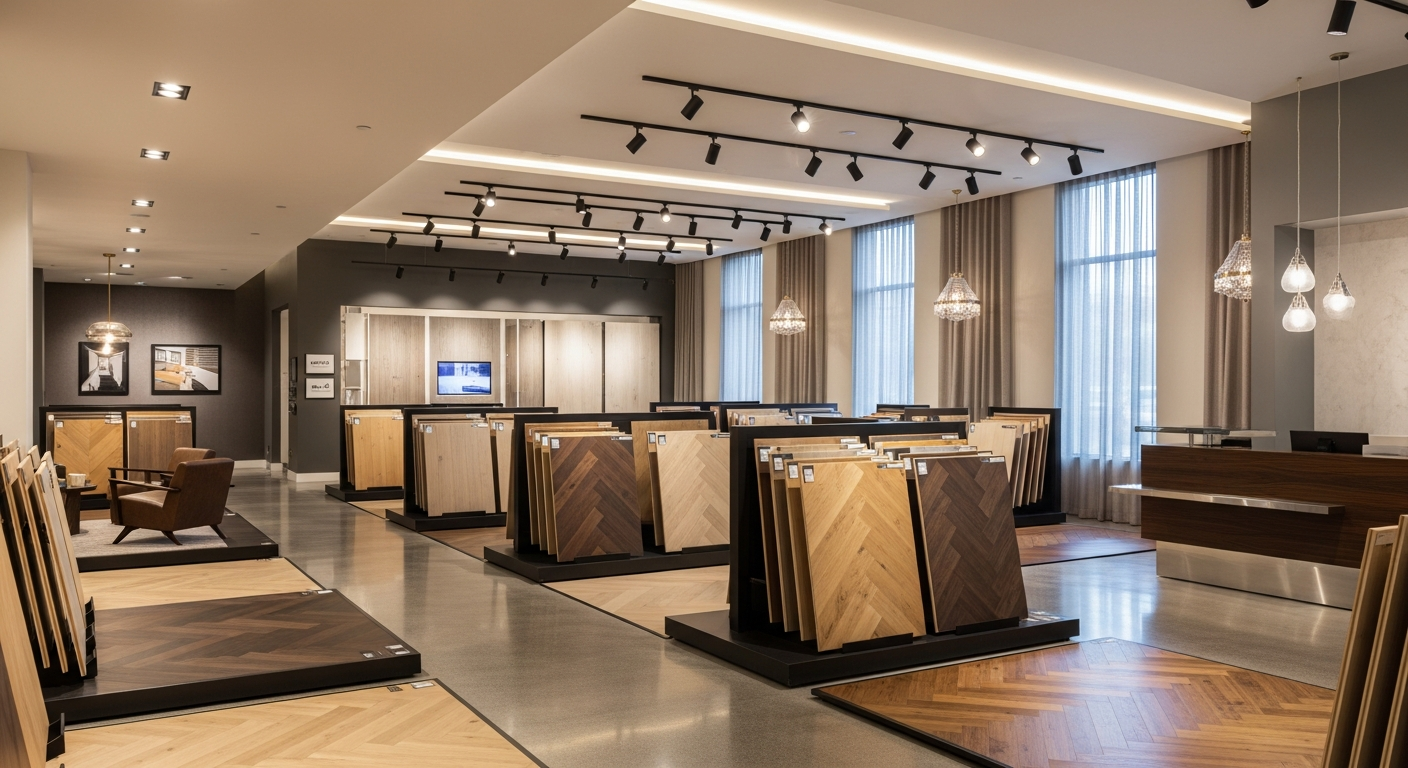
- The Strategy: We launched a series of "Showroom Walkthrough" videos and high-end before-and-after carousels.
- The Offer: "Free Professional Design Consultation + $500 Off Whole-House Projects."
- The Result: Within 90 days, they were generating leads at $42 each. Their show rate increased from 45% to 72% thanks to AI follow-up. They closed $1.2M in new business from a total ad spend of $18,000.
Chapter 10: Common Pitfalls and How to Avoid Them
The biggest mistake is "Lead Abandonment." Many contractors buy leads, call once, and then give up. It takes an average of 7-12 touchpoints to close a high-ticket renovation project. If you don't have an automated reputation and nurture system, you are leaving 70% of your potential revenue on the table.
Another common error is Creative Stagnation. You cannot run the same project photo for 6 months. Homeowners in your local area will get "Ad Fatigue." We recommend swapping out your primary creative assets every 30-45 days to keep your lead costs low and your engagement high.
Chapter 11: The 12-Month Flooring Growth Roadmap
Months 1-3: The Foundation
Focus on asset gathering and funnel construction. Launch your first "Broad" campaign and establish your baseline Cost Per Lead. Implement CAPI and basic AI follow-up.
Months 4-6: Optimization
Test advanced retargeting sequences and refine your sales handoff protocol. Start feeding offline conversion data back into the algorithm to improve lead quality.
Months 7-12: Scaling
Diversify into high-production video and influencer partnerships. Scale budget while maintaining ROI. Implement predictive AI to forecast project volume and crew needs.
Final Thoughts: Building Your Legacy
Meta Ads is not a "magic pill." It is a powerful engine that requires the right fuel (Creative) and the right steering (Data). For flooring contractors who are willing to invest in their brand and their systems, it is the fastest path to market dominance in 2026. Softscale Marketing is here to help you build that legacy.